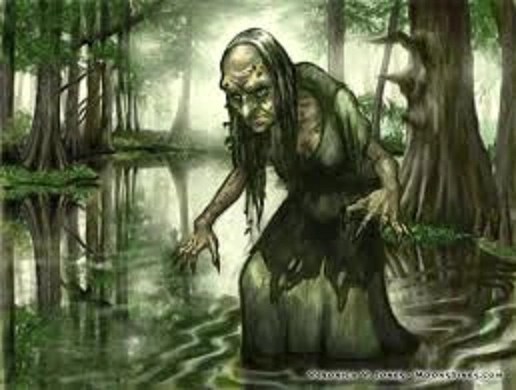
The first element probably is cognate with Old English haga “enclosure, portion of woodland marked off for cutting” (see hedge (n.)). Old Norse had tunriða and Old High German zunritha, both literally “hedge-rider,” used of witches and ghosts. The second element in the prehistoric compound may be connected with Norwegian tysja “fairy; crippled woman,” Gaulish dusius “demon,” Lithuanian dvasia“spirit,” from PIE *dhewes- “to fly about, smoke, be scattered, vanish.”
https://www.etymonline.com/word/hag
Hag or Hedge-rider
 HE Hag or Hedge rider. Usually old and ugly women were depicted. Let’s see what’s the story behind the original meaning. In the old settlements often a hedge was planted, hedges usually had thorns, so crossing a hedge would mean that you would get hurt, so animals, like wolves and foxes, would stay outside. A hedge could, for example, be a blackthorn, and a blackthorn has magical qualities. Both berries and leafs are commonly used in protection- and counter-curse-magic 1).
The hedge also has another meaning: it is a portal to the nether-world. We often go into a trancelike state, known as ‘the becoming’. This is somewhat difficult to explain, because there are many steps involved, like ‘gathering sprouse’ or gathering the energy of the Red Serpent 2). In Traditional Witchcraft it is not an easy task, a hobby or something you learn overnight.
That’s why a Hag is often depicted as an old woman, because it takes years of learning in silence 3) and of course the ins and outs are not out in the open. Traditional Witchcraft is powerful in the hands of an accomplished witch, you are not wise to share knowledge that could mean (self)destruction for people with a false and enlarged ego. Don’t share a recipe for a bomb, that could mean innocent people to get killed by a fool.
So, images of an old woman, associated with a hag is not without a reason. Nothing is easy and comes overnight. That’s a big difference with forms of witchcraft that are out in the open and have different rules. What kind of traditional magic, whether it be Traditional Witchcraft, Seiðr Magic 4), Shamanism, Voodoo/Hoodoo, Guna Guna or other forms, all take time and secrecy. That’s why I only share the upper surface, without going into details. By the way: a traditional witch is a specialist, not a blind follower. We ride the hedge…

Notes
1 ) A Pellar is a Cornish term for a witch, specialized in counter-curses. Since a curse or hex is often a very complicated thing, the pillar first determines what method of hexing is used, the witch that caused the hex and to provide a solution or a ‘return to sender’ counter-spell. This is a delicate process and not an easy task. On the Internet we can find ‘one size fits all’ spells, but this is bogus. It takes years of practice and often a mentor guiding you. I’ve you were raised in traditional witchcraft you are taught how to act in specific situations. You cannot learn it from spell books only. That’s why is takes years of decennia to become an accomplished and specialized pellar.
2) A very useful book is ‘ Traditional Witchcraft, a Cornish Book of Ways‘ by Miss Gemma Gary, ISBN 0956104347. You can order is from Troy Books UK.
3) Another great book is Silent as the Trees by Miss Gemma Gary, about Devonshire Witchcraft.
4) Old Scandinavian Magic, see: https://vikingr.org/magic-symbols/seidr
and the Youtube channel of Freyia Norling.
 N life, everything is a ritual. Waking up, caring for yourself, bathing, doing your make-up, cooking, making love, taking a stroll in the woods, talking to a friend and so on. In (Traditional) witchcraft the one difference is that we do everything purposely, with intention, with focus, with intensity, being utterly in harmony with yourself, nature and her forces. We don’t just take what we need, we also give. That’s what I call the Law of Giving and Receiving. Yes, Witchcraft comes with a price, so we are careful what we wish for. Not everything we want, desire, aim for is wise. We are selfish nor altruistic, though at times we are. When we want power, why do we want it? Do we want to blow up our ego like a balloon, which is full of nothingness and eventually is just humbug.
 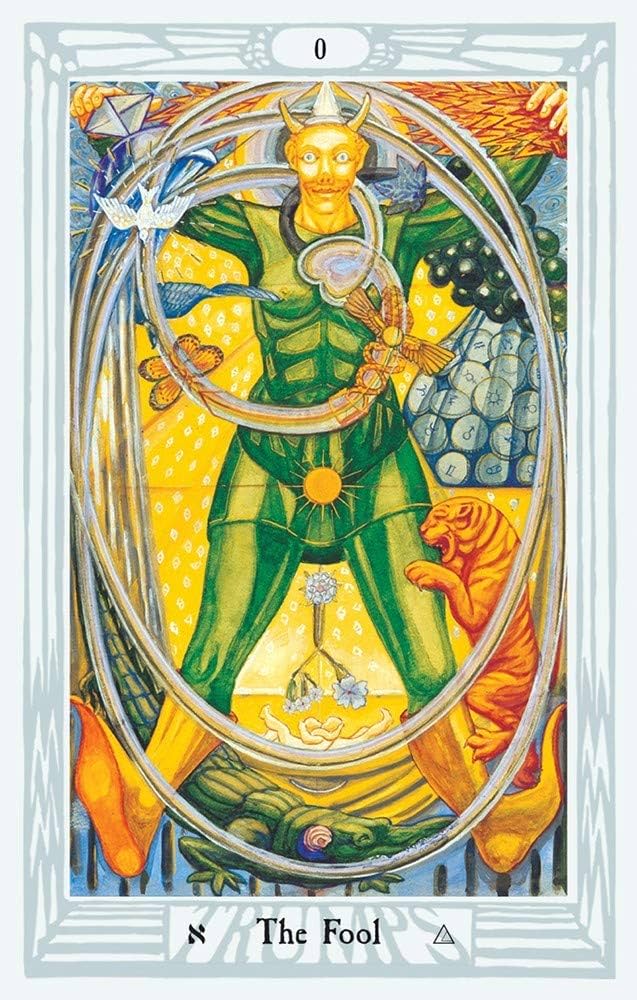 Let me give an example: Love spells! There is so much we can do ourself, like taking a bath (hahaha), dressing for the occasion, staying true to your true self and knowing if the one you desire is suitable or not, having consensus! Enchanting someone can be manipulation. Without any magical means can be magical in itself. Sometimes people want something that will be disappointing in the end. A beautiful woman or man can be a trap in the end and then you are disappointed? Witchcraft is the Craft of the Wise, not the ineptitude of the fool! So, part of the journey is being able to learn, in stead of stumbling in your stubbornness. I too still have to learn and when I know that I don’t know I will seek advise of the spirits, the ancestors, the divinities or a wise sister, but in traditional witchcraft you’ll never get a ‘one size fits all’ answer or a standard spell that can fix your hell. Sometimes you’ll get the advice to pick up the peaces yourself if you find the cause of your own failure. I don’t speak to the newbies to the craft, but to those that have the audacity to say that they are a know-it-all, did-it-all. It is a life long journey and the mayor part is being able to learn.
 HAT is the difference between Wicca and Traditional Witchcraft? In fact there are a lot of differences. For ages, any kind of magic was prohibited by the church and if someone testified against you, condemning you as a witch, your doom was sealed. There was no escape, if you didn’t confess you were tortured until you did and if you didn’t you were subjected to the waterproof, if you were innocent you’d drown, if you didn’t you were burned at the stake. Now many scholars came to the conclusion that the majority of the victims of the witch hunts were christian women, it was even rare that a real witch was put to death. In many regions, like Cornwall, Essex, Sussex, Devon, Dartmoor, Exmoor, Wales, Scotland etc, the witches kept in the dark, hidden for the persecutors like the crazy king James (yes the one who lend his name tot the King James Bible).
 Let’s now turn to Wicca for a moment. Gerald Gardner travelled the world to seek out many magical traditions to gather information, to compare, to merge various Witchcraft and Magick traditions, among that Guna Guna, Voodoo/Hoodoo, ceremonial magick, Oreo Temple Orientis, Argentum Astrum (Crowley), Freemasonry and anything that he seemed fit to incorporate in to his new magical system, which he named Wicca. From the 1950’s his new religion became quite popular with many branches that came forth from. Now In Wicca the Wind Directions and the four elements are different: East: Air, North: Earth, West: Water, South: Fire. Let’s now compare that to Cornish Traditional Witchcraft:
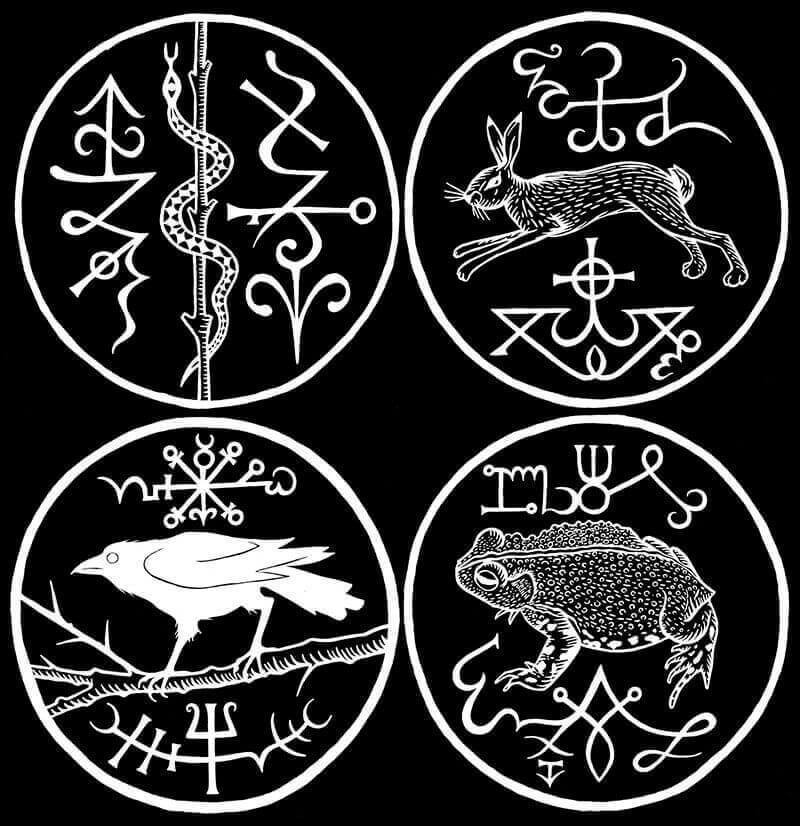 As I have said, in Cornish Traditional Witchcraft, and other British and Celtic Traditions the elements are situated different. East: Fire, North: Wind, West: Water (the only similarity with Wicca), the South: Earth. As you can see there are animals associated with the elements, but it would take a bit to much time now to go into details about that. Another important difference is that in Wicca a circle is casted, this is done clockwise, but in Cornish Traditional Witchcraft ‘the compass is laid’ and is is done witheshins or ‘against the clock’. The workings are done according to the seasons and the eight high feasts, but also dependent on the workings. There is much practice and learning involved and it is not a hobby, but a way of life (but that is of course also the case with Wicca or any other tradition.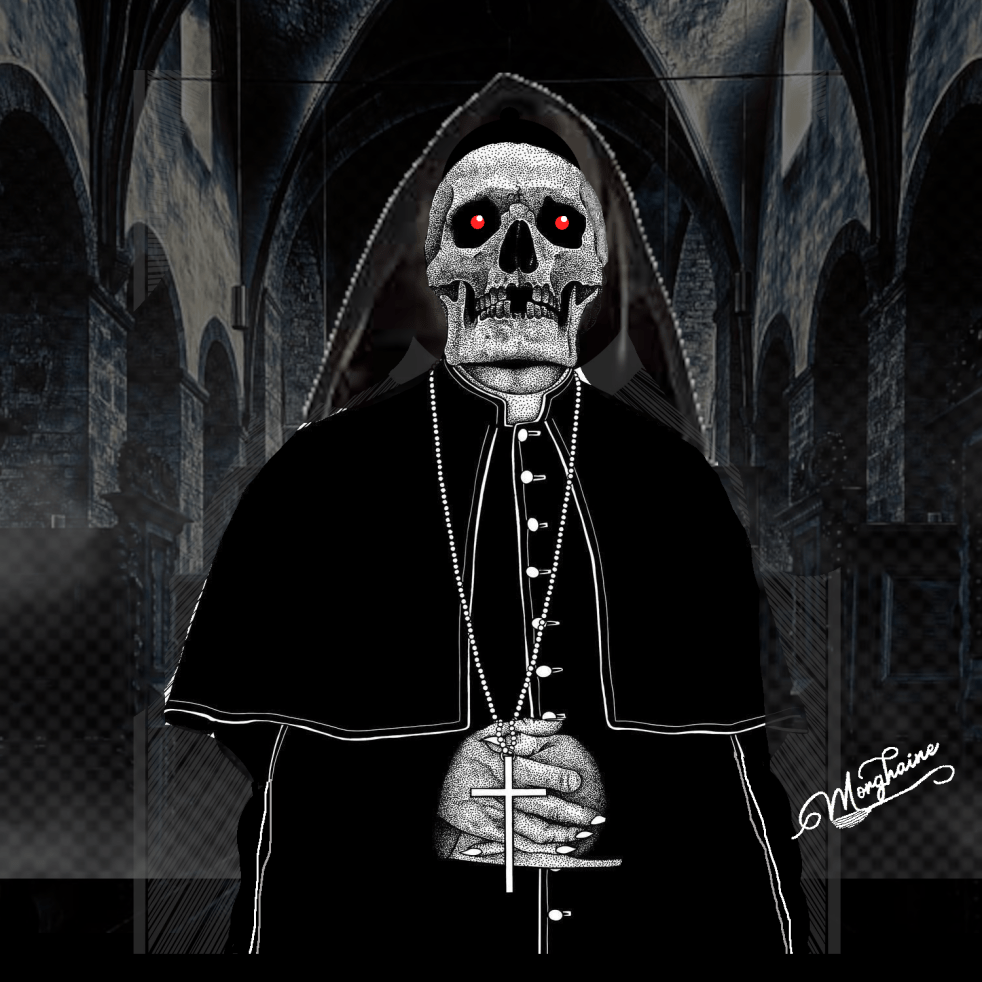
 ROM the beginning of christianity priests and church leaders were obsessed with eradicating everything they called ‘occult’ and especially witchcraft. The zealous woman-hating obsessed Heinrich Kramer or his ‘holy name’ Henricus Institorius produced his Maleus Malificarum of ‘hammer of the witches’ which portrayed women as evil, especially those women who practiced natural healing, functioned as midwives or any woman with knowledge who would not conform to church doctrine. The Dark Ages were the time of the evil reign of the church, who killed anyone who would not convert to christianity.
 tymologically speaking the word Witch means: someone who has knowledge, from the Germanic/Anglo-Saxon ‘Wit’, what ‘question, quest or a thing (ding) that needs to be answered’ means. Also the Germanic word ‘wet’ what ‘law’ of ‘outcome of a (legal) matter’ means.
 Morghain’s Traditional Witchcraft