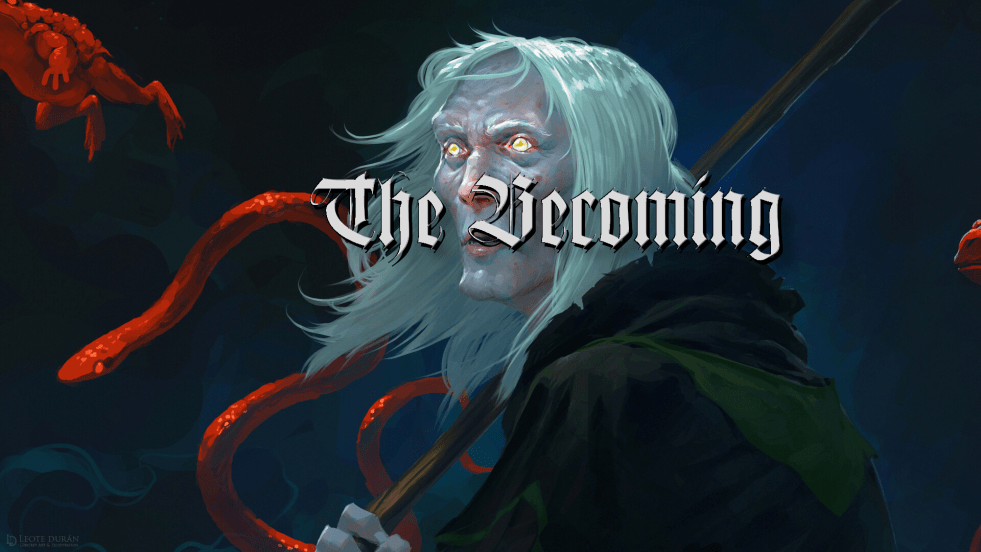
 VERY important part of the Traditional Witches’ practice, is what we call ‘the Becoming’. It is a trance-like state, not infused by drugs, though sometimes natural means, mostly plants from the Nightshade family can be used, with caution, though the Becoming is an essential state of mind, in combination with ‘gathering Sprouse’, a Cornish word for ‘the power of the Red Serpent, AKA the Magical Power that infuses the Earth. This is not something just drawn from the Earth fort our own benefit. The Law of Receiving and Giving is of the utmost importance. Some choose a shortcut by summoning Spirits, but in the Old Ways it’s a way of respect and a long road of patience and hardship to undergo as a means go discipline and hard work. I feel that any shortcut will never gain any benefit. The most powerful witches and wizard acquired their strength without any shortcut.
 Without the God of Witchcraft, in Cornwall Bucca, nothing can be accomplished. Hallowing the land and the creature therein, is to hallow Bucca, Who is intrinsically connected to the soil and its magic. Everything, visible and invisible is connected to the Bucca or The Cornish Devel. Traditional Witchcraft is therefore not an easy road to succes, and one of the ways in acquiring the necessary power is ‘the Becoming’. I certainly would recommend the Book: Traditional Witchcraft, a Cornish Book of Ways by Gemma Gary. A lot can be said about that, but those who seek shall find.

 HERE have been a few articles and YouTube videos that claim that ‘Traditional Witchcraft’ is ‘the original religion that was introduced by Gerald Gardner’. This is a misleading and incorrect conclusion, based upon the fact that ‘the original forms of western witchcraft had died out because of the witch-hunts’. Now there are several reasons that this was never the case:

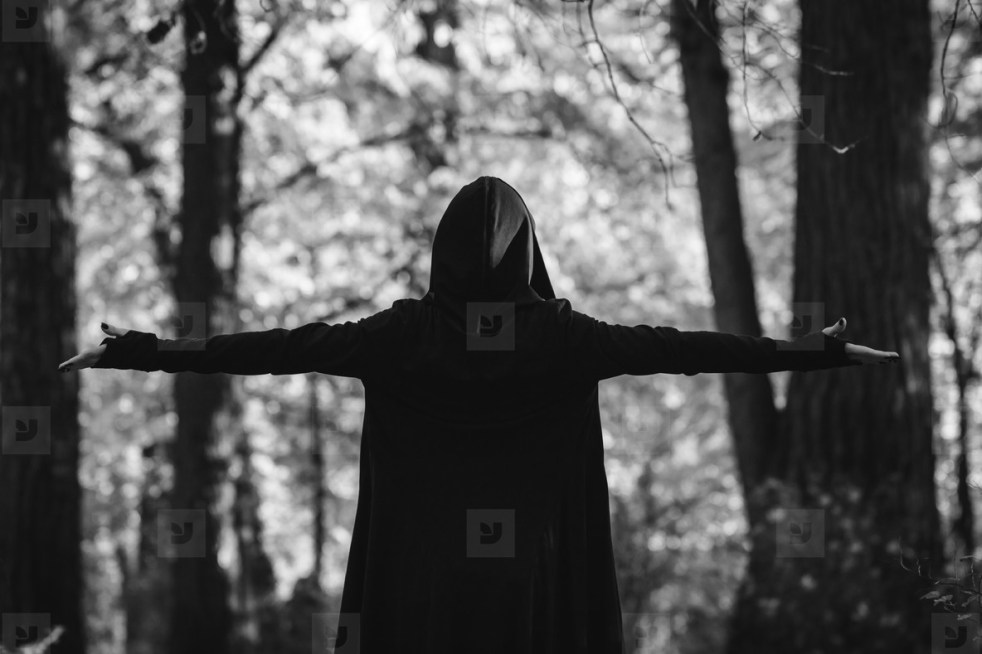
 ITCHCRAFT is not something you have to believe in to make changes your life. Believing is something monotheistic religions invented to keep people from using their intellect and ‘sixth sense’. You have to believe in their non-sense, one of these believes is that witchcraft and magic(k) are bad. It is bad for their income and power-hunger to control the masses. In the days before christianity witchcraft and magic was the realm of healers, wise ones and those who acquired knowledge of cattle, farming, hunting, to lift curses of to cast them. People knew their way to the Wise, the Pellars, the wayside witches, the wizards, the druids and shamans.
 O many people, especially Wiccans, why Traditional Witchcraft isn’t really open to the outside world about the practices. No, for the most part that’s completely true, on the other hand there are a number of books on Traditional Witchcraft available now like
 tymologically speaking the word Witch means: someone who has knowledge, from the Germanic/Anglo-Saxon ‘Wit’, what ‘question, quest or a thing (ding) that needs to be answered’ means. Also the Germanic word ‘wet’ what ‘law’ of ‘outcome of a (legal) matter’ means.
 N the 1950’s Gerald Gardner introduced Wicca to the world as a new revival of Witchcraft. In 1950 the Witchcraft Act of 1735 1) was abolished, and Gardner thought the time was right to proclaim Witchcraft still existed and proclaimed to be a witch. By then Wicca became a new religion , with many modern branches.
 Morghain’s Traditional Witchcraft