Witchcraft

Traditional Witchcraft vs Wicca

Traditional Witchcraft vs Wicca

HERE have been a few articles and YouTube videos that claim that ‘Traditional Witchcraft’ is ‘the original religion that was introduced by Gerald Gardner’. This is a misleading and incorrect conclusion, based upon the fact that ‘the original forms of western witchcraft had died out because of the witch-hunts’. Now there are several reasons that this was never the case:

  • During the Witch-hunts that formally began with the introduction of the Maleus Malificarum (the Hammer of the witches by Heinrich Kramer & Jacob Sprenger). Scholars found out that there were no ‘real witches’ persecuted, but rather old and suspected women that did not fit the required role of submissive women and thus were suspected of being witches. Most of the were christian
  • Those men and women that didn’t conform to standard church doctrine, they also could be priests, ministers and/or were from other denominations.

Those witches, wise ones, druids, folk healers and pellars (a Cornish term for those who can provide counter curses) where still held in high regard and were protected by those who needed their services, some of them were persecuted, but quite a number escaped and survived.

The notion that the original form of witchcraft died out and thus Wicca is the only remaining form of western witchcraft that remains until today is therefore totally wrong. Families and individuals that kept their traditions survived because of secrecy and still exist in UK regions like Cornwall, Devonshire, Dartmouth, Exmoor, Wales, Scotland etcetera.

Other forms of magic like Rootworking (Hoodoo/Voodoo) Shamanism, Gipsy Witchcraft (Romania etc), Guna Guna (Indonesia), Seidr (Scandinavia) survived the wheel of time.

Now I notices a number of articles and videos where people suggest and claim that ‘Gardnerian Wicca in its original form is Traditional Witchcraft. One should study books, among those published by Troy Books Uk to see that Traditional Witchcraft is still alive and kicking
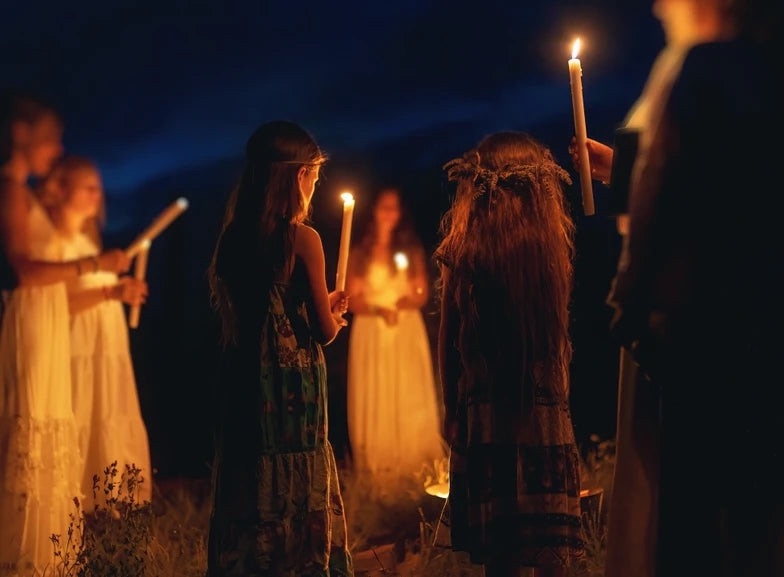
initiations · Witchcraft

Initiations

In Traditional Witchcraft initiations are vital. It’s not as easy as becoming a Wiccan and every Coven, Circle, Grove or group have their own prerequisites, conditions and often tests. My own prerequisites are likewise. Novices have to stand the tests and before that I must know who someone really is, their attitude, stubbornness of those who refuse to be taught, because ‘the know everything’. The last example is someone I would absolutely refuse. My own Craft, Rites, Initiations and Grades require a mental, spiritual and intellectual receptiveness, otherwise I simply refuse to share anything.

Magick and Witchcraft is not to be taken lightly, it can heal and destroy and everything I do takes time, effort and most of all discipline.

I even don’t want to talk on my blog about the outer perimeters of my Craft, the divinities, rituals and tools. I have complex ones and nothing ‘electric’, like a mixture of thing I like and others I dislike. My Grimoire is about 700 pages with incantations, initiations, of which some have to be learned by heart. There is ancient language involved and that’s why initiations can take time, forming a Counsel, different function in order to become potent. Secrecy is required and transgressions or offenses against the rules have severe consequences. That’s all I can say about it.

There are many secret societies who have similar conditions, that’s why I will stay in the shadows and not advertise.

Explination

The Hag

The first element probably is cognate with Old English haga “enclosure, portion of woodland marked off for cutting” (see hedge (n.)). Old Norse had tunriða and Old High German zunritha, both literally “hedge-rider,” used of witches and ghosts. The second element in the prehistoric compound may be connected with Norwegian tysja “fairy; crippled woman,” Gaulish dusius “demon,” Lithuanian dvasia“spirit,” from PIE *dhewes- “to fly about, smoke, be scattered, vanish.”

https://www.etymonline.com/word/hag

Hag or Hedge-rider

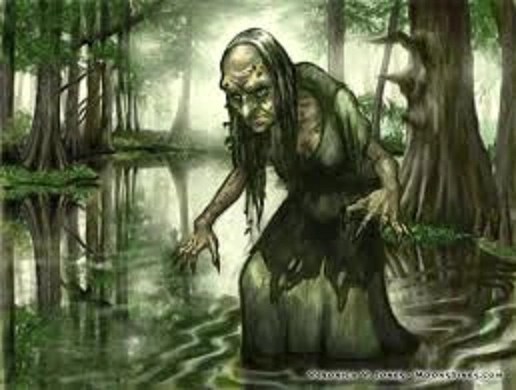
HE Hag or Hedge rider. Usually old and ugly women were depicted. Let’s see what’s the story behind the original meaning. In the old settlements often a hedge was planted, hedges usually had thorns, so crossing a hedge would mean that you would get hurt, so animals, like wolves and foxes, would stay outside. A hedge could, for example, be a blackthorn, and a blackthorn has magical qualities. Both berries and leafs are commonly used in protection- and counter-curse-magic 1).

The hedge also has another meaning: it is a portal to the nether-world. We often go into a trancelike state, known as ‘the becoming’. This is somewhat difficult to explain, because there are many steps involved, like ‘gathering sprouse’ or gathering the energy of the Red Serpent 2). In Traditional Witchcraft it is not an easy task, a hobby or something you learn overnight.

That’s why a Hag is often depicted as an old woman, because it takes years of learning in silence 3) and of course the ins and outs are not out in the open. Traditional Witchcraft is powerful in the hands of an accomplished witch, you are not wise to share knowledge that could mean (self)destruction for people with a false and enlarged ego. Don’t share a recipe for a bomb, that could mean innocent people to get killed by a fool.

So, images of an old woman, associated with a hag is not without a reason. Nothing is easy and comes overnight. That’s a big difference with forms of witchcraft that are out in the open and have different rules. What kind of traditional magic, whether it be Traditional Witchcraft, Seiðr Magic 4), Shamanism, Voodoo/Hoodoo, Guna Guna or other forms, all take time and secrecy. That’s why I only share the upper surface, without going into details. By the way: a traditional witch is a specialist, not a blind follower. We ride the hedge…


Notes

1 ) A Pellar is a Cornish term for a witch, specialized in counter-curses. Since a curse or hex is often a very complicated thing, the pillar first determines what method of hexing is used, the witch that caused the hex and to provide a solution or a ‘return to sender’ counter-spell. This is a delicate process and not an easy task. On the Internet we can find ‘one size fits all’ spells, but this is bogus. It takes years of practice and often a mentor guiding you. I’ve you were raised in traditional witchcraft you are taught how to act in specific situations. You cannot learn it from spell books only. That’s why is takes years of decennia to become an accomplished and specialized pellar.
2) A very useful book is ‘ Traditional Witchcraft, a Cornish Book of Ways‘ by Miss Gemma Gary, ISBN 0956104347. You can order is from Troy Books UK.
3) Another great book is Silent as the Trees by Miss Gemma Gary, about Devonshire Witchcraft.
4) Old Scandinavian Magic, see: https://vikingr.org/magic-symbols/seidr
and the Youtube channel of Freyia Norling.